A patio cushion that starts absorbing water does not necessarily need replacing. Its fabric may still be sound while the water repellent finish needs attention. The useful first question is whether you are dealing with a dirty surface, a worn finish, or physical damage. Each calls for a different response.
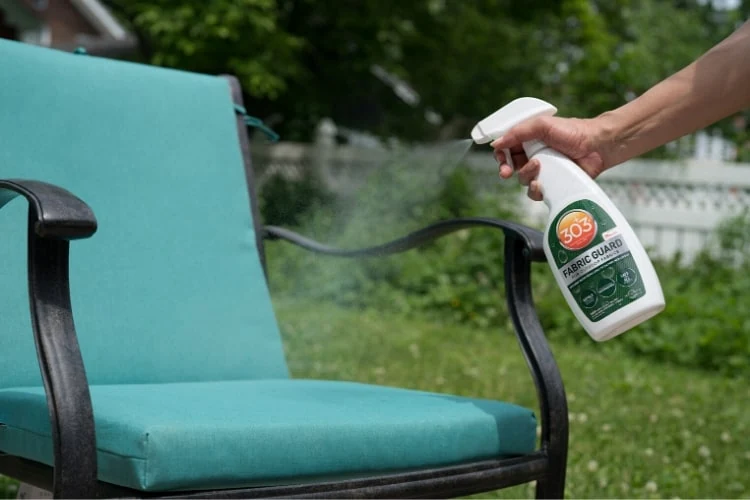
303 Fabric Guard is intended to restore water repellency on compatible outdoor fabrics. This guide helps you decide when to use it, organize the work, and give the treatment time to cure. Start with the care instructions for the actual fabric and the directions on your bottle. Keep both available while you work.
What 303 Fabric Guard does
Gold Eagle describes Fabric Guard as a treatment for outdoor natural and synthetic fabrics that helps resist water and water based stains while preserving breathability and feel. It does not provide direct UV protection, and it is not intended for indoor upholstery or vehicle interiors. See Gold Eagle's product guidance.
Think about the result you need before choosing a bottle. A cover that needs cleaning, a cushion with an open seam, and a sound canopy with reduced beading are three different projects. Photograph any questionable areas before starting. That simple record makes it easier to describe a problem to the furniture maker or canvas shop if you need help later.
Keep three decisions separate: whether the material is compatible, whether the item is ready for treatment, and whether the weather gives you enough working time. A yes to the first question does not automatically answer the other two. This is especially useful when you have several pieces to maintain and want to finish everything in one afternoon.
Identify the fabric before choosing the treatment
Look for the furniture label, original invoice, boat canvas specification, or care sheet. Record the fabric name and collection where possible. “Outdoor cushion” describes the item, but it does not identify its fibers, backing, coating, or construction. A useful care decision starts with those details rather than with color or texture alone.
If the identification label has disappeared, contact the maker with the model name and clear photographs. Include a close view of the face, reverse, seam, and any remaining tag. Ask specifically which cleaning and retreatment instructions apply. This gives support something concrete to work with and helps you avoid buying a product based on an uncertain guess.
| What you have | What to establish | Useful next step |
|---|---|---|
| Labeled outdoor cushion fabric | Fabric identity and furniture care instructions | Check cleaning and retreatment requirements together |
| Boat canvas with several panels | Which panels are textile, coated fabric, or clear material | Make a separate care plan for each material |
| Unknown replacement cover | Supplier, fabric specification, and finish | Ask the supplier before treating a large area |
| Fabric with torn stitching | Location and extent of damage | Arrange a repair assessment before surface treatment |
| Indoor seating or vehicle upholstery | The correct interior care product | Choose a product specifically labeled for that use |
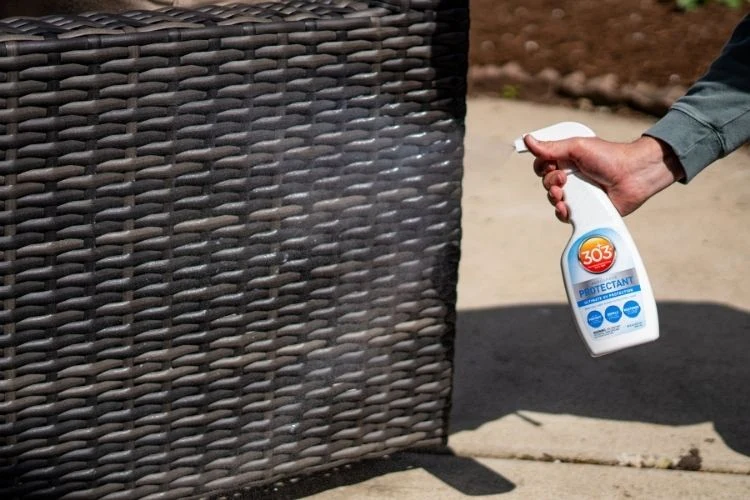
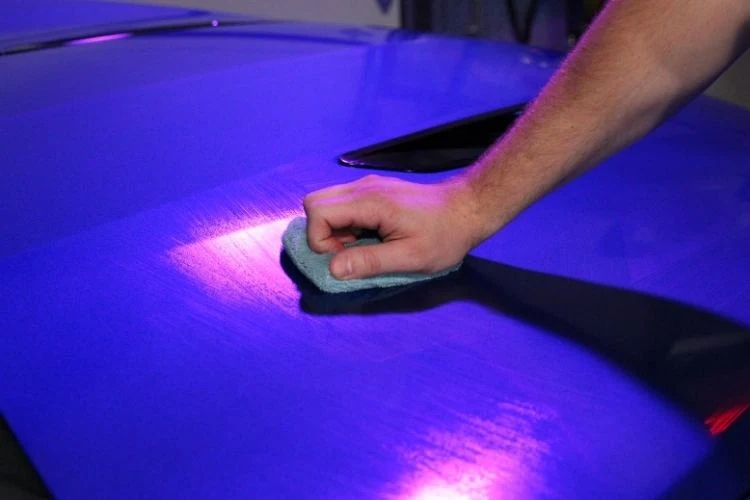
For a mixed material project, separate the shopping list as well. Our 303 Aerospace Protectant guide covers a different protection task. The graphene and ceramic guide addresses automotive finish care. Similar brand names do not make these treatments interchangeable.
Where Sunbrella guidance fits
Sunbrella's upholstery care document lists 303 Fabric Guard among its US retreatment options. It explains that retreatment may become useful after repeated thorough cleaning or extended exposure. It does not say that every new cushion needs an immediate application. The same document directs owners to clean, let the fabric air dry completely, and follow the retreatment container's instructions outdoors in a ventilated area. Read the Sunbrella upholstery care document for its full scope.
That distinction matters when you have just unpacked new furniture. Put the purchase information and care sheet somewhere easy to find, then establish a baseline. Photograph the cushions and note the fabric collection. You will have something useful to compare with next season, instead of relying on a vague memory of how the surface looked.
For older furniture, write down what has already been applied. If a previous owner or cleaning service used a treatment, ask for its name. A short history of cleaning and treatment is more useful than a blanket promise that a surface has been “protected.” Share that history when asking either manufacturer for advice.
Clean first and inspect while you work
Sunbrella's general care sequence begins with loose dirt removal, followed by mild soap and water, gentle brushing, thorough rinsing, and air drying. Its cleaning guidance also directs owners to the instructions for their particular fabric application. Use that category specific guidance when a simple surface clean is not enough.
Organize the work so dirty pieces never pass over the clean ones. One practical arrangement is a cleaning area beside the water supply, a separate drying area, and an untouched place for pieces that are ready for treatment. With a large patio set, this keeps you from confusing a freshly rinsed cushion with one that has already dried.
Inspect each piece as it moves through the process. Look along piping, attachment tabs, zippers, folded edges, and the points that rest against the furniture frame. A photograph of a questionable seam is easier to discuss with a repairer while the cover is accessible. Leave repairs on a separate list so they do not get forgotten once the whole set looks cleaner.
Use small identifiers if the cushions fit specific chairs. A sketch of the seating arrangement with numbered pieces is enough; you do not need to mark the fabric itself. This also helps you keep track of which pieces received treatment and which are waiting for an answer about compatibility.
For a persistent stain, stop and find instructions for that stain and fabric combination. Avoid building an improvised sequence of cleaners simply because each bottle claims to work on outdoor materials. Keep the product names and your cleaning notes together so support can evaluate what actually happened.
Make drying a separate part of the schedule
Do not schedule the job as “wash and spray the cushions.” Give washing, drying, and treatment their own places on the calendar. This changes the practical plan: you need room for the set between stages, and you need an alternative seating arrangement if guests are coming.
Check the whole item, including the underside, seams, and any areas that were folded during cleaning. A convenient sunny space is not useful if half the cushion remains pressed against a wet surface. Arrange the work so you can inspect and reposition pieces without dragging them through dirt.
Removable covers deserve a second check before you unzip them. Sunbrella advises consulting the furniture maker because cushion construction varies. Its upholstery instructions also distinguish hand cleaning from machine washing and specify air drying. Treat a zipper as access hardware, not automatic permission to strip the cushion or put its cover into a washing machine.
If the furniture maker allows removal, photograph the arrangement first. Record how corners, seams, and inserts line up. Keep every cover with its corresponding cushion. On an irregular lounge set, two covers that look nearly identical when empty can be frustratingly different when you try to fit them again.
Plan the weather window and workspace
The current Gold Eagle Marine Fabric Guard directions require fabric above 70°F, or 21°C, and give a curing period of 12 to 24 hours depending on conditions. They require protection from rain and dew until curing is complete. The liquid and spray are flammable; keep ignition sources away from the product and the treated item until dry. Consult the current marine product directions and your bottle's full precautions.
Work backward from the next time you need the furniture or boat cover. A Saturday evening gathering is a poor deadline for an uncertain Saturday morning cleaning job. Choose a window that leaves room for preparation and delays rather than aiming for the shortest possible turnaround.
Before opening the bottle, decide where every treated piece will remain. Consider the overnight forecast as carefully as the afternoon forecast. Also check routine sources of water around the house, including scheduled sprinklers. A clear sky does not help if an irrigation cycle begins halfway through the drying period.
Walk around the work area and look at neighboring surfaces. Plan protection for items outside the treatment area and leave enough room to move without leaning on wet fabric. Bring the care sheet, bottle, measuring notes, and clean supplies into reach first. Having everything ready reduces interruptions during application.
Estimate coverage with real measurements
Gold Eagle gives a coverage range of 40 to 75 square feet per 16 ounce bottle, depending on fabric and application method. Treat the range as a purchasing estimate, not a target that you must force one bottle to reach. The same current product directions call for overlapping passes to produce an evenly wet surface.
For a rectangular piece, measure the faces that the manufacturer permits you to treat. Multiply length by width for each face, then add the results. Include side panels when they are part of the job. If you measured in inches, divide the square inch total by 144 to convert it to square feet.
For example, imagine a simple rectangular cushion measuring 24 by 24 by 4 inches. Its two large faces total 8 square feet. Its four side panels total about 2.67 square feet. Treating all those outer surfaces would therefore involve roughly 10.67 square feet before allowing for construction details. Four cushions of that size would total about 42.7 square feet. This is a geometry example, not a product consumption test.
Now compare the total with the coverage range on the actual bottle. The four cushion example is already above the low end of the published 16 ounce range. Planning around the most optimistic figure leaves little flexibility. Check whether your job includes additional back cushions, loose pillows, or an umbrella that was absent from the original count.
Keep your measurements. The next time you maintain the same furniture, you can update the list instead of starting again. Note how much product the actual job used, but do not assume a different fabric or application will consume exactly the same amount.
A practical application sequence
Use the instructions on the bottle you purchased. Gold Eagle's current Fabric Guard Usage Directions specify an evenly wet application and 12 to 24 hours of curing. Some FAQ text on the same site still mentions a shorter interval. Do not use that shorter FAQ interval to override the container directions or rush a job that is not ready.
- Confirm the item. Match the fabric and intended use to the care information you collected.
- Check readiness. Finish cleaning and drying before bringing the treatment into the workflow.
- Prepare the area. Set up protection for adjacent surfaces and a clear place for the item to remain afterward.
- Check a discreet area. Follow the container's testing instructions before committing to the full visible surface.
- Apply methodically. Work through a planned sequence so you can track the area already covered.
- Record the finish time. Leave the item undisturbed for the required curing period and conditions.
- Inspect before use. Review the finished item and follow the label before returning it to service.
For a patio set, work piece by piece. Finish one identifiable panel before moving to the next. A written sequence such as seat one, seat two, back one, back two is less error prone than walking between several pieces and trying to remember which corners remain.
Use the supplied sprayer as directed. Gold Eagle's application advice discourages rollers because distribution can become uneven. Its support guidance also cautions against accumulating product in cushion stuffing. More liquid is not a useful substitute for controlled coverage. See Gold Eagle's application advice for additional context.
If you have to stop, note exactly where you stopped before attending to anything else. Do not rely on memory after a telephone call or delivery. With a large piece, a quick diagram of completed sections can save more time than trying to interpret subtle changes in appearance later.
Adapt the plan for boat canvas
A boat cover adds access and assembly questions to the same basic maintenance job. Before removing it, photograph its fitted position, fasteners, support poles, and any sections that overlap. Keep hardware organized according to the cover maker's instructions. A clear reassembly record is particularly valuable when someone else will help put it back.
Sunbrella's marine canvas guidance allows cleaning on the boat or dockside where size permits. It notes that light cleaning may not require retreatment. It also gives separate precautions for the coated underside of Sunbrella Plus. Read the marine canvas care instructions before treating a fabric name as permission to handle every side in the same way.
Choose the work location around the cover's size and the site's rules. Think through where you can spread it out, how you will prevent contact with neighboring equipment, and how you will move it afterward. A small dock can make each of those tasks awkward even when the weather is suitable.
Inspect the assembled cover separately from its surface finish. Note where water has been entering, where fabric rubs against supports, and whether a particular fastener or seam needs attention. Water beading on one panel does not answer a question about an opening elsewhere. Send a clear photograph of the leak location to the canvas maker rather than simply requesting “more waterproofing.”
For a fabric convertible top, the vehicle and top manufacturer's instructions remain part of the plan. Gold Eagle describes cleaning and drying before treatment, protecting neighboring paint and glass, and allowing the treatment to cure before exposure. Its fabric convertible top care article provides a separate starting point for that job.
Check the result without confusing beading with repair
Wait until the required curing process is complete before assessing water repellency. Gold Eagle recommends a water check when judging whether retreatment is needed. Keep your observations simple: note the location, what the water did, and whether different areas behaved differently. A phone photograph can help you compare the same place later.
Do not turn a small surface check into a claim that the entire cushion or cover is waterproof. Fabric, seams, openings, support, and construction all belong in the overall assessment. If an item has a known leak, verify that issue through the maker's recommended procedure instead of drawing a conclusion from droplets elsewhere.
A useful maintenance record needs only a few entries: fabric identification, cleaning date, product used, treatment date, conditions, and an observation after curing. This takes less effort than reconstructing the job months later. It also gives a professional a much clearer starting point if something does not look right.
Troubleshoot the observation, then choose the response
| Observation | What to review | Next action |
|---|---|---|
| Different areas behave differently | Cleaning, dryness, application sequence, and curing conditions | Document the pattern and consult product support if unresolved |
| Water enters near stitching | Seam condition and cover construction | Ask the maker or repairer to assess the opening |
| A visible mark remains after cleaning | The stain type and fabric specific cleaning guidance | Resolve the cleaning question before retreatment |
| Appearance changes after a test | Exact fabric, prior treatments, and the product used | Stop and ask for advice before expanding the area |
| The weather interrupts curing | Time, exposure, and container instructions | Contact the manufacturer for a recovery procedure |
A troubleshooting message is easier to answer when it describes events in order. Give the fabric name, the product name, the cleaning method, the time between stages, and what you observed. Attach photographs taken in ordinary daylight. Avoid covering the affected area with another product while waiting for a reply, since that adds another variable to the question.
If a sprayer stops working, keep the original container and product identification available when contacting support. Do not move an unfamiliar liquid into an unmarked household bottle. Follow the packaging directions for storage and disposal, including any local requirements that apply.
For professional help, ask whether the cleaner or canvas shop has worked with your exact fabric family. Explain whether you want stain removal, a seam repair, or assessment of a previous treatment. Those are specific tasks that can be discussed and quoted; “make it like new” leaves too much open to interpretation.
Two ways to organize a larger project
A written plan is especially useful when you cannot take every piece out of service at once. The examples below are planning exercises rather than demonstrations of a particular treatment result. Adapt the sequence to the care instructions, your workspace, and the weather.
A six chair patio set
Start by counting individual pieces rather than chairs. Six chairs might have six seat cushions, six backs, and several accent pillows, each with a different size. List them separately and check whether they share the same fabric and care label. Put unknown items aside for identification instead of assuming that the entire set can follow one procedure.
Next, measure the available preparation and holding space. If there is room for only three chairs' cushions without stacking, divide the set into two groups. Put the first group's drying and treatment stages into the schedule before starting the second. This keeps the project within the space you actually have.
Arrange alternative seating for the whole period. A spare dining chair is easier to organize beforehand than during a meal when someone discovers that the patio cushions are unavailable. Tell other household members which pieces are being worked on so they do not move them back onto the furniture to tidy the area.
A boat cover before a weekend trip
Begin with the departure date and the cover maker's instructions. Include time to remove the cover, inspect it, complete any necessary cleaning, and reinstall it after the required treatment process. If the schedule has no room for a repair or a weather delay, move the maintenance job to a more suitable week.
Consider who will help handle the cover. Confirm that person's availability for removal and reinstallation, not just for the moment you plan to spray. Keep the photographs of support positions and fasteners on the same phone you will have at the boat. A good diagram does little good on a computer at home.
Before starting, decide what happens if you find damaged stitching. Set a point at which you will stop, photograph the defect, and contact the canvas shop. This prevents a rushed surface treatment from taking priority over the problem that actually needs attention.
For either project, the useful milestone is a fully prepared, correctly treated item that is ready to return to service. Finishing the bottle or reaching the end of the afternoon is not a maintenance milestone. Plan around the item, and let the product directions determine when the next stage can begin.
Build a routine around the way you use the space
Choose a few moments when inspection fits naturally into your routine: before setting up the patio for the season, after a major cleaning, and before putting seasonal pieces away. Use these as reminders to look, not automatic instructions to add another coat. Your notes should tell you what changed since the previous check.
For a frequently used dining set, keep the approved cleaning supplies easy to reach. For a boat, store the canvas care information with the cover specification and repair records. Sunbrella's spring cleaning advice emphasizes routine care and choosing a retreatment when extended use or repeated cleaning makes it useful.
Before the next job, open your measurements and photographs, confirm the current container directions, and check the fabric care sheet. Then use the fabric care collection to choose the product that matches the task. A small amount of preparation makes a large cushion set or boat cover easier to handle with care.